
7 Signs It’s Time to Move Into a Small Manufacturing Space
If you own a small business that makes products, you may be operating out of your garage or family basement, a shared workshop, a studio, or a commercial unit with just enough room to make your products and get your business started.
While these setups can work perfectly well for a startup, they may eventually fall short of a growing business’s needs. That is often when the question comes up: Is it time to move your company into a dedicated small manufacturing space?
In general, it may be time to move when your current space begins limiting production, storage, deliveries, equipment, workflow, or access.
So how do you know when it’s time to make that move? Here are seven signs to look for.
Key Takeaways
Quick Links
1. Your Current Space Is Starting to Limit Production
One of the first signs that you may need a new production space is when your current setup starts affecting how much work you can realistically get done.
At the beginning, finding creative ways to organize equipment and make use of every available corner may work well. But if you are turning down orders, delaying production, or avoiding new opportunities because you simply do not have enough room, your space may be holding the business back.
A larger production space can give you the room to organize production more effectively and support your next stage of growth.
2. Receiving Deliveries Has Become a Problem
What once amounted to a few boxes or occasional deliveries can change considerably once production picks up. You may find yourself receiving regular shipments of raw materials, components, packaging, or equipment.
If every delivery requires extra coordination or moving materials through a space that was never designed for it, your location may no longer be practical.
For a small manufacturer, features such as loading docks, freight elevators, and wide hallways can make receiving much easier. The more efficiently materials can move from the delivery point to your production area, the less time your team spends working around the limitations of the building.
3. You Need More Room for Materials and Finished Products
Production is only one part of the space your business needs. You also need somewhere to keep raw materials, packaging, tools, work in progress, and finished products waiting to be shipped or picked up.
In a smaller workspace, storage can quickly start competing with production. Shelving gets added wherever it fits, boxes end up in work areas, and you have to move materials around just to make room for the next job.
Separating storage from active work areas can make materials easier to manage, reduce unnecessary handling, and give your team more room to focus on production.
4. Your Production Flow No Longer Makes Sense
As your business grows, the way work moves through your space becomes just as important as the amount of space you have.
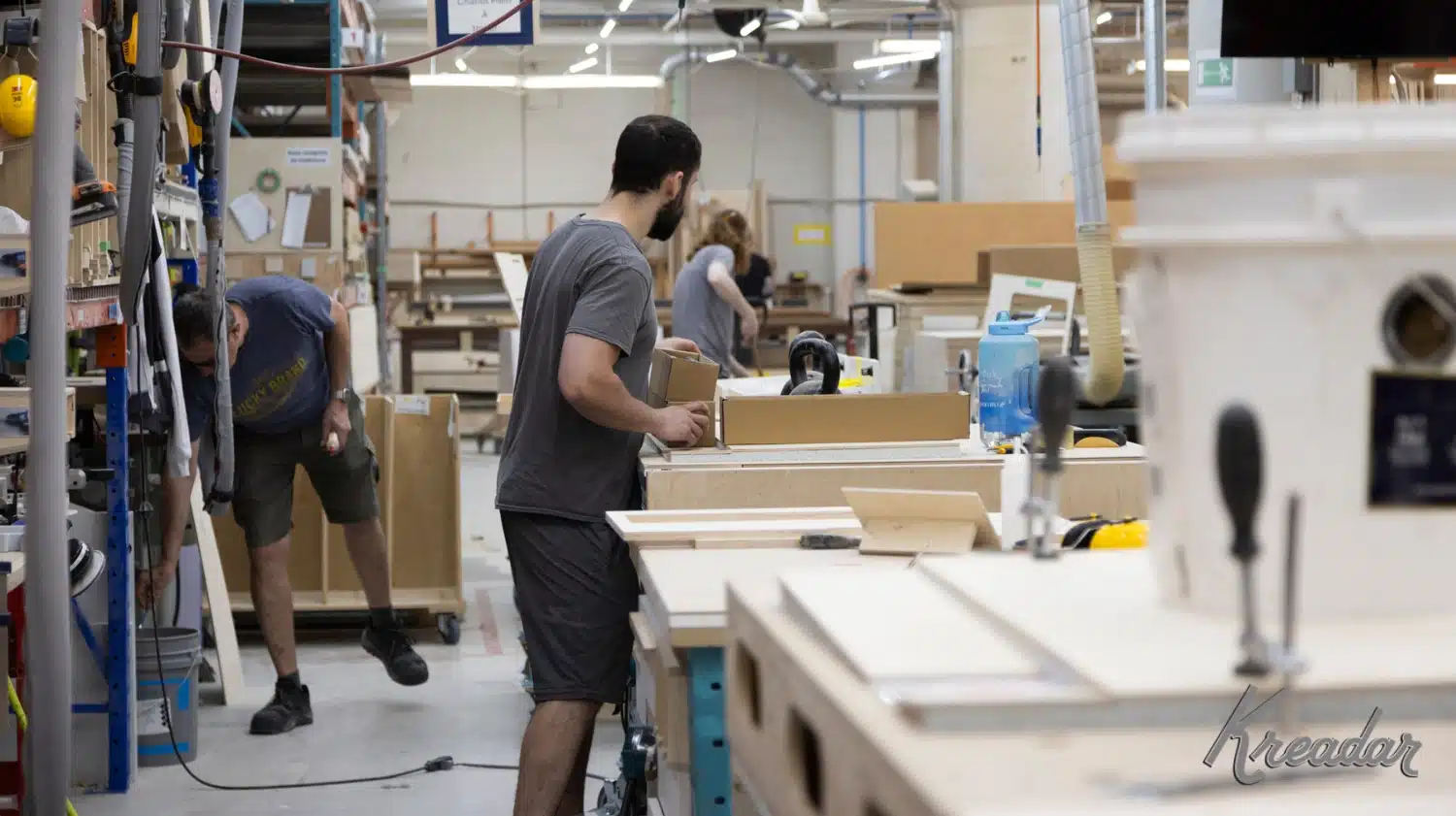
Ideally, materials should follow a logical path from receiving and storage through production, finishing, packaging, and shipping. When your space is too small or poorly laid out, those activities often begin to overlap.
If you are constantly moving materials back and forth, shifting equipment, or interrupting one task to make room for another, your layout may be working against you. A dedicated production space gives you more freedom to organize the layout around the way your business actually operates.
5. Your Equipment Has Outgrown the Space
The equipment that worked for you when you started may not be enough as your production needs evolve. You may add larger machines, more workbenches, shelving, or specialized tools that were never part of your original setup.
Even if everything technically fits, you still need enough room for people to work, move materials, and access equipment properly.
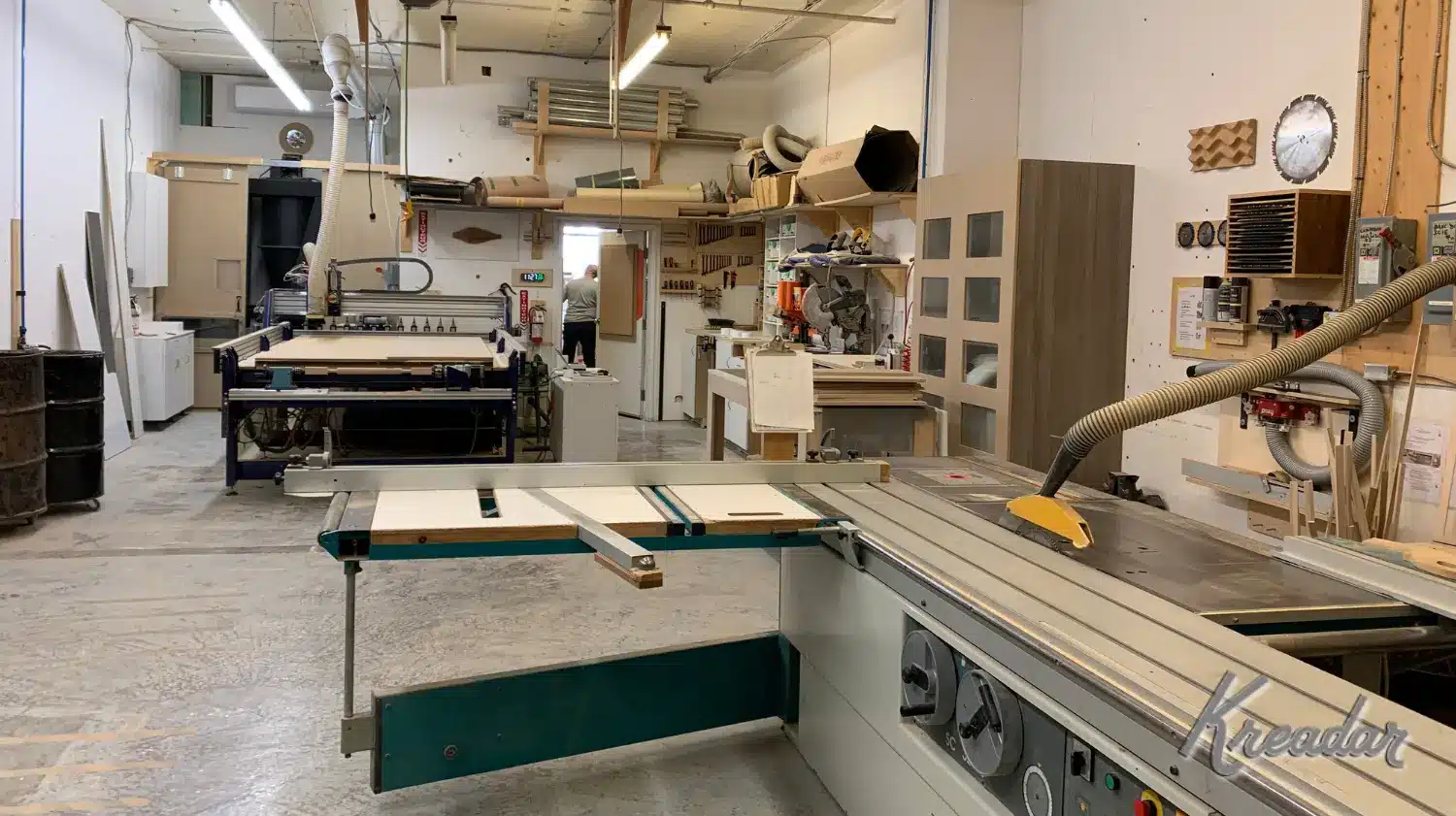
Features like durable concrete floors, sufficient ceiling height, and an open layout become more important as your equipment needs evolve. They can also give you greater flexibility to arrange machinery properly and accommodate future additions.
6. Parking and Access Are Becoming Daily Problems
A busier operation usually means more people coming and going throughout the day, including employees, suppliers, customers, couriers, and service technicians.
If finding parking or simply getting to and from your workplace has become a recurring frustration, the location may no longer be serving the business as well as it once did.
A manufacturing space with convenient building access and on-site parking can simplify day-to-day operations for everyone involved. It can also make things easier for suppliers and customers, while reducing the time you and your team spend dealing with logistical issues outside the actual work you do.
7. Your Business Is Taking Over Your Personal Space
If you started your business from home, there may come a point when work begins taking over more than just your schedule.
A garage or a basement that once worked well can gradually become filled with equipment, materials, packaging, and finished products. At the same time, the distinction between your work and personal life can become harder to maintain.
Moving into a small manufacturing space gives your business a place of its own while allowing you to reclaim your home. It can also help establish a more consistent work routine and make it easier to separate running your business from your personal time.
If several of these signs feel familiar, it may be time to look beyond simply finding a bigger space. The goal is to find a manufacturing space that better fits how your business operates today and gives you room to grow.
What Should You Look for in a Small Manufacturing Space?
Once you decide that your current setup is no longer working, the next step is finding a space that actually fits the way your business operates. Square footage matters, but it is only one part of the decision.
Production and Storage Space
Think about how much room you need not only for production, but also for materials, inventory, tools, packaging, and finished products. A well-organized space should give each of these functions enough room without constantly competing for the same area.
Loading and Receiving
Consider how deliveries will reach your unit. If you regularly receive larger shipments or palletized materials, features such as loading docks, freight elevators, and wide hallways can make receiving much more practical.
Floors and Ceiling Height
Features like durable concrete floors and sufficient ceiling height can be especially important if you use machinery, shelving, or larger equipment. The space should be able to support what you use today while giving you some flexibility for future additions.
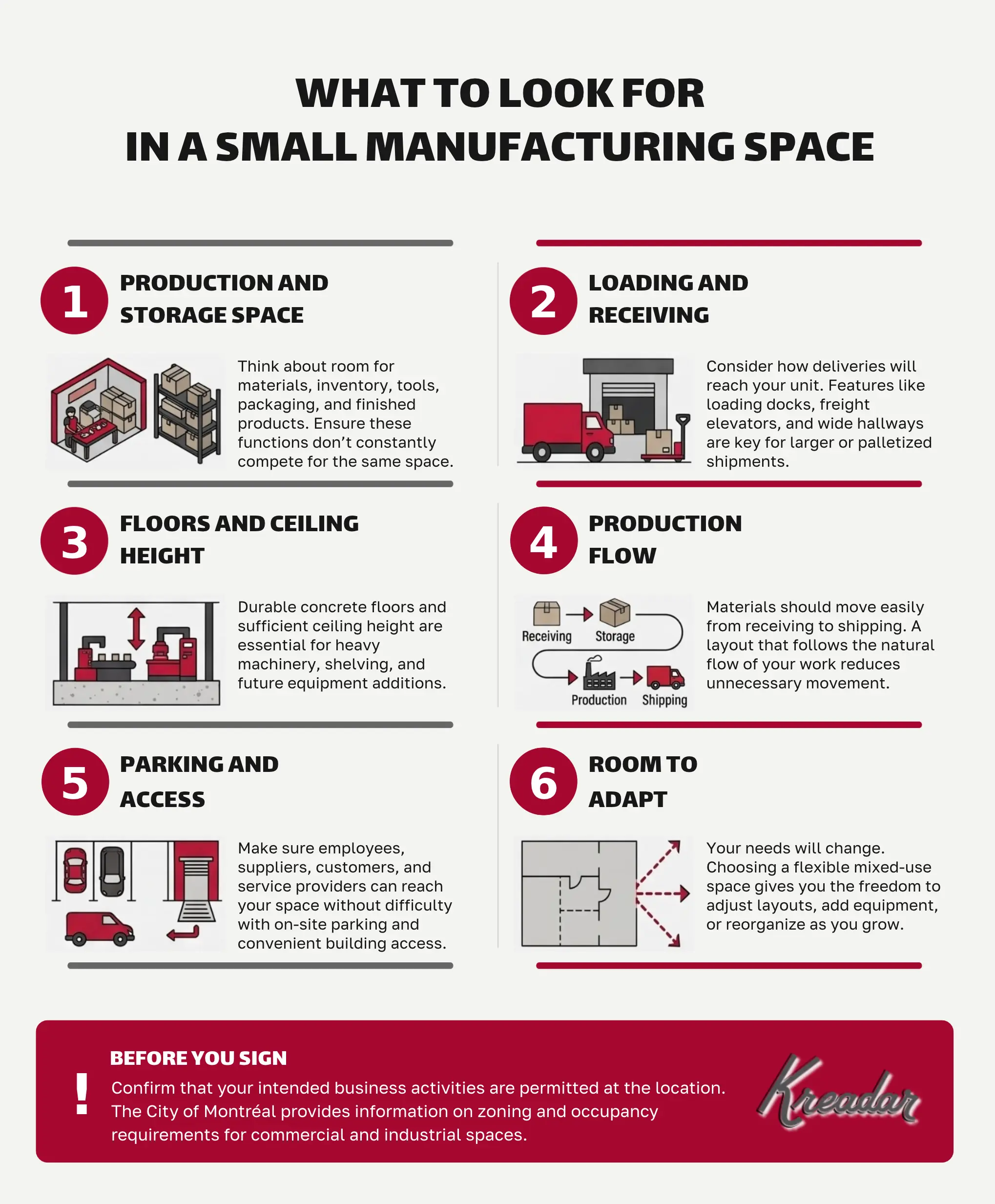
Production Flow
Look at how easily materials can move from receiving to storage, production, packaging, and shipping. A layout that follows the natural flow of your work can help reduce unnecessary movement and make daily operations easier.
Parking and Access
Make sure employees, suppliers, customers, and service providers can reach the space without difficulty. On-site parking and convenient building access can become especially valuable as your business grows.
Room to Adapt
Your needs may not look exactly the same a year or two from now. Choosing a flexible mixed-use space can give you more freedom to adjust your layout, add equipment, or reorganize your production as the business evolves.
Before you sign: Confirm that your intended business activities are permitted at the location. The City of Montréal provides information on zoning and occupancy requirements for commercial and industrial spaces.
The Right Space Should Make Production Easier
Moving into a dedicated manufacturing space is a significant step, but it should ultimately make running your business easier.
The right space should support the way you work rather than force you to work around it. It should give you enough room to organize production properly, accommodate your equipment, manage materials efficiently, and adapt as your needs change.
If you are reaching the point where your current setup is starting to hold you back, it may be worth exploring what a more suitable small manufacturing space could offer.
At Kreadar sur Fullum, our manufacturing spaces for lease in Rosemont–La Petite-Patrie are designed for small businesses involved in light production, assembly, fabrication, and other hands-on work.
When you are ready to find a space that better fits your business, explore our available manufacturing spaces or contact us to discuss what you need.