
Budget Considerations When Renting a Small Commercial Space
Renting a commercial space is an important step for any business. Whether you are moving out of a home-based operation, adding production capacity, or simply looking for a better location, the space you choose needs to work financially as well as operationally.
When searching for a small commercial space for rent, it is easy to focus primarily on the advertised rent. From a leasing perspective, however, we always recommend looking at the complete picture.
Utilities, insurance, improvements, equipment, parking, and the practical requirements of running your business can all affect what a space ultimately costs.
Before beginning your search, determine what your business can realistically afford each month based on your current revenue, expected growth, and anticipated operating costs.
A realistic budget helps you compare spaces more effectively and choose one that can support your business over the course of the lease. The first and most important step is understanding the true cost of rent.
Key Takeaways
Quick Links
Understand the True Cost of Rent
The advertised rent is a starting point, not necessarily your complete monthly occupancy cost.
Commercial leases can be structured differently, so two spaces with a similar base rent may not have the same total cost. Ask whether expenses such as property taxes, insurance, maintenance, and utilities are included in the rent or charged separately.
Depending on the property and lease structure, these costs could include:
- Electricity and heating
- Building operating expenses
- Maintenance
- Property taxes, where applicable
- Parking
- Other building-related services
Some expenses will be relatively predictable, while others may fluctuate throughout the year. Heating and electricity, for example, can vary depending on the season and the type of work being done in the space.
You should also ask how rent and other lease costs may change during the term. Understanding scheduled increases or indexation clauses before signing allows you to forecast your occupancy costs beyond the first year.
Instead of relying solely on base rent, compare spaces based on their total anticipated occupancy costs.
Budget Beyond the Monthly Rent
Your budget should also account for what it will take to make the space operational for your business.
Some units may be ready for you to move into with minimal work. Others may require painting, lighting changes, partitions, shelving, or other improvements.
Depending on your business, additional setup expenses may include:
- Furniture and workstations
- Internet installation
- Telephone services
- Signage
- Storage systems
- Tools and production equipment
- Moving costs
Remember to consider the move itself and any disruption it could cause. If moving equipment, inventory, or production temporarily interrupts your operations, that downtime can have a financial impact too.
Then consider your ongoing operating expenses. Utilities, business insurance, internet, cleaning, and maintenance can all become part of your monthly cost.
Parking is worth considering as well. If employees or customers regularly drive to your business, paid parking can become a significant recurring expense. At Kreadar Sur Fullum, our buildings include free on-site parking for employees and clients, so tenants do not need to add paid parking at the property to their monthly budget.
When evaluating a space, ask yourself a simple question: What will it cost me to actually operate my business here?
Match the Space to How Your Business Operates
A commercial space should fit the way your business works.
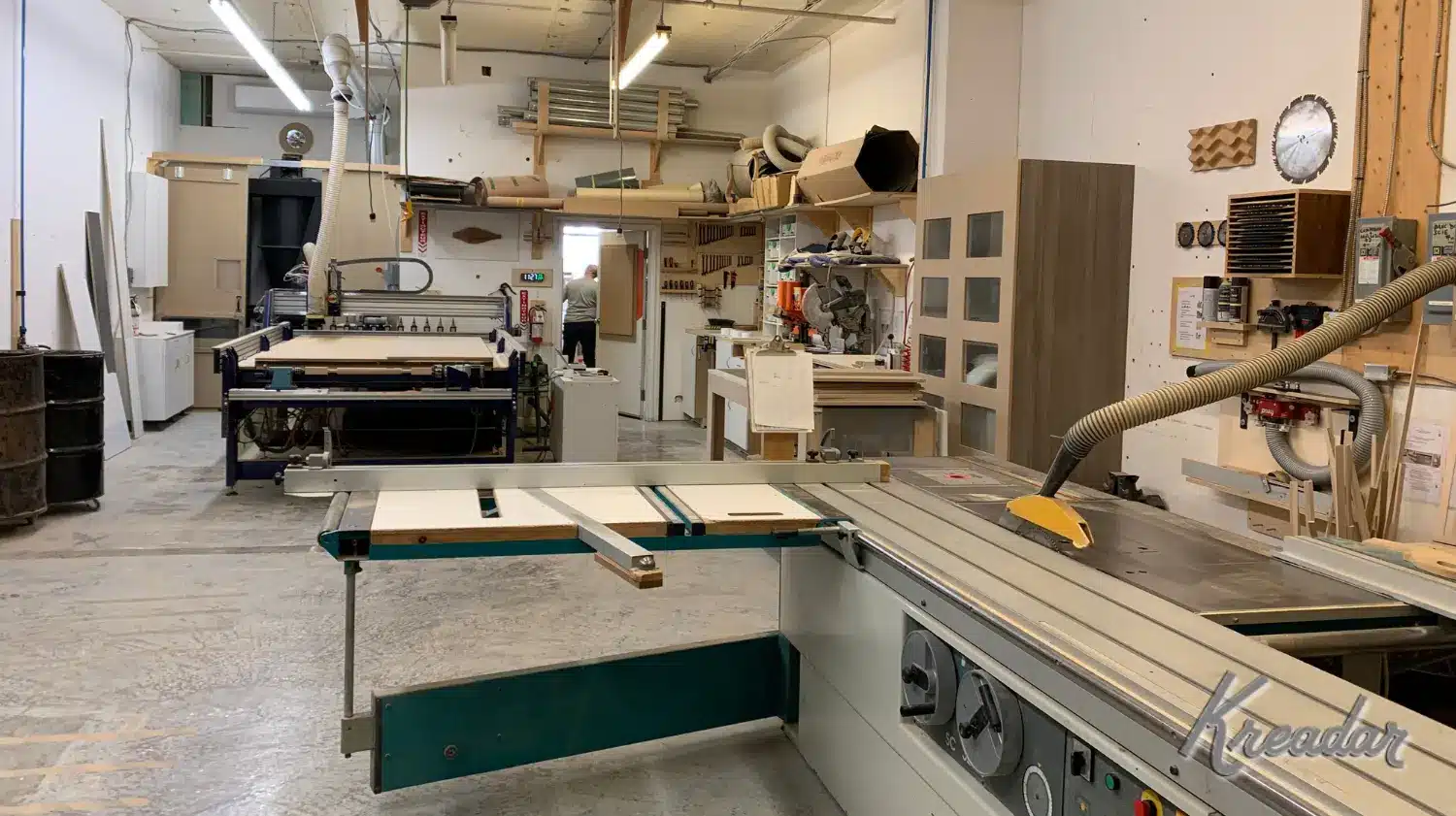
Before focusing on square footage, think about what will happen inside the space every day. If you operate a workshop or small production business, calculating how much space you actually need should take into account your equipment, storage, workflow, and room for future growth.
For makers, artisans, light manufacturers, and other businesses that regularly move physical products or materials, building infrastructure can have a major impact on day-to-day operations. Convenient access to a loading dock or freight elevator may be far more valuable than additional square footage you do not need.
At Kreadar Sur Fullum, our commercial buildings provide loading docks, freight elevators, passenger elevators, and extra-wide hallways to help tenants move materials, equipment, and finished products through the buildings.
Durable concrete floors are also well suited to many workshop and light manufacturing uses.
The objective is to find a space that supports your workflow rather than forcing your business to adapt around an unsuitable building.
Look for Flexibility as Your Business Changes
One of the most common budgeting challenges is deciding how much space to rent.
Rent too much and you could spend years paying for square footage you are not using. Rent too little and you may quickly find yourself searching for another space.
Instead, look for a space that can adapt as your company evolves. For some businesses, combining production, storage, and office functions within the same unit can make much better use of the available square footage.
The commercial lease term should also fit your circumstances. A well-established company may be comfortable making a longer commitment, while a startup or rapidly changing business may prefer an adaptable mixed-use space with lease terms suited to its changing needs.
The goal is to choose a space that works for the business you operate today while giving you reasonable room to evolve.
Compare Overall Value, Not Just Rent
Two commercial spaces with similar rental rates can deliver very different value.
Where you establish your business is another important consideration. Think about how employees, customers, and suppliers will reach your business. Public transportation, parking, and proximity to the businesses you regularly work with can all affect convenience and operating costs.
Then consider the property itself. Does it have the infrastructure your business needs? Are deliveries straightforward? Is parking available? Can employees and customers access the building conveniently?
The surrounding business community can also add to the value of a location. For many entrepreneurs, being surrounded by other active businesses creates opportunities to make connections and become part of a larger entrepreneurial community.
When comparing commercial spaces, the best value is often the property that allows your business to operate efficiently, not simply the one with the lowest advertised rent.
Questions to Ask Before Renting a Small Commercial Space
Before committing to a commercial space, we recommend asking:
- What exactly is included in the rent?
- Which utilities and operating expenses are additional?
- How and when can the rent increase?
- Who is responsible for repairs and maintenance?
- Are services such as waste or snow removal included?
- Is parking included?
- Does the building support my delivery and storage requirements?
- Can the space accommodate my business if my needs change?
- What improvements can I make, who pays for them, and will I need to restore the space when the lease ends?
The more you understand before signing, the easier it will be to create an accurate budget and compare your options.
Find a Space That Fits Your Business and Your Budget
Finding a small commercial space for rent should not come down to rent alone. Consider whether your business can comfortably carry the total occupancy cost throughout the lease, not simply whether the first month’s rent fits your budget. Think about how the building supports your operations, the flexibility of the space, and the practical value of its location and amenities.
Touring several properties and asking detailed questions will give you a much clearer idea of what your budget can realistically provide.
If you are looking for a flexible commercial, studio, workshop or industrial space in Montreal, explore the spaces available at Kreadar sur Fullum in Rosemont-La Petite-Patrie.
Want to see how one of our spaces could work for your business? Request a visit.


